
Deeper calm, on purpose.
Zendo is a headband that uses gentle, low-level neurostimulation to help your mind settle faster. Put it on, start a 20-minute session, and feel the shift. No app to learn, no years of practice.

One session to feel it.
What Zendo actually does
Most calm products ask you to trust a vibe. We would rather tell you exactly what is happening on your forehead.

Gentle neurostimulation
A low-level current passes through saline pads resting on your forehead, in the same family of stimulation studied in research settings, kept at a comfortable everyday level.
A 20-minute session
Choose a mode and press start. Most people feel calmer, more focused, or more grounded inside a single session. No app required.
Yes, you feel it
A light tingle where the pads sit. It is gentle, and most people stop noticing it within a minute. We tell you up front so it is a feature, not a surprise.
From boxed to calm in about a minute
The whole setup is simpler than brewing tea.

Place a fresh pad
Snap on a clean saline pad. Your headband ships with 20.

Choose your mode
Tap to pick an intensity. Most people settle on a favourite within a week.

Press start and breathe
Sit back for 20 minutes. The session ends on its own.

A quieter mind, without the years of practice.
Meditation works. It also takes most people months to feel it. Zendo is a shortcut into the same calm, on the days you need it most.
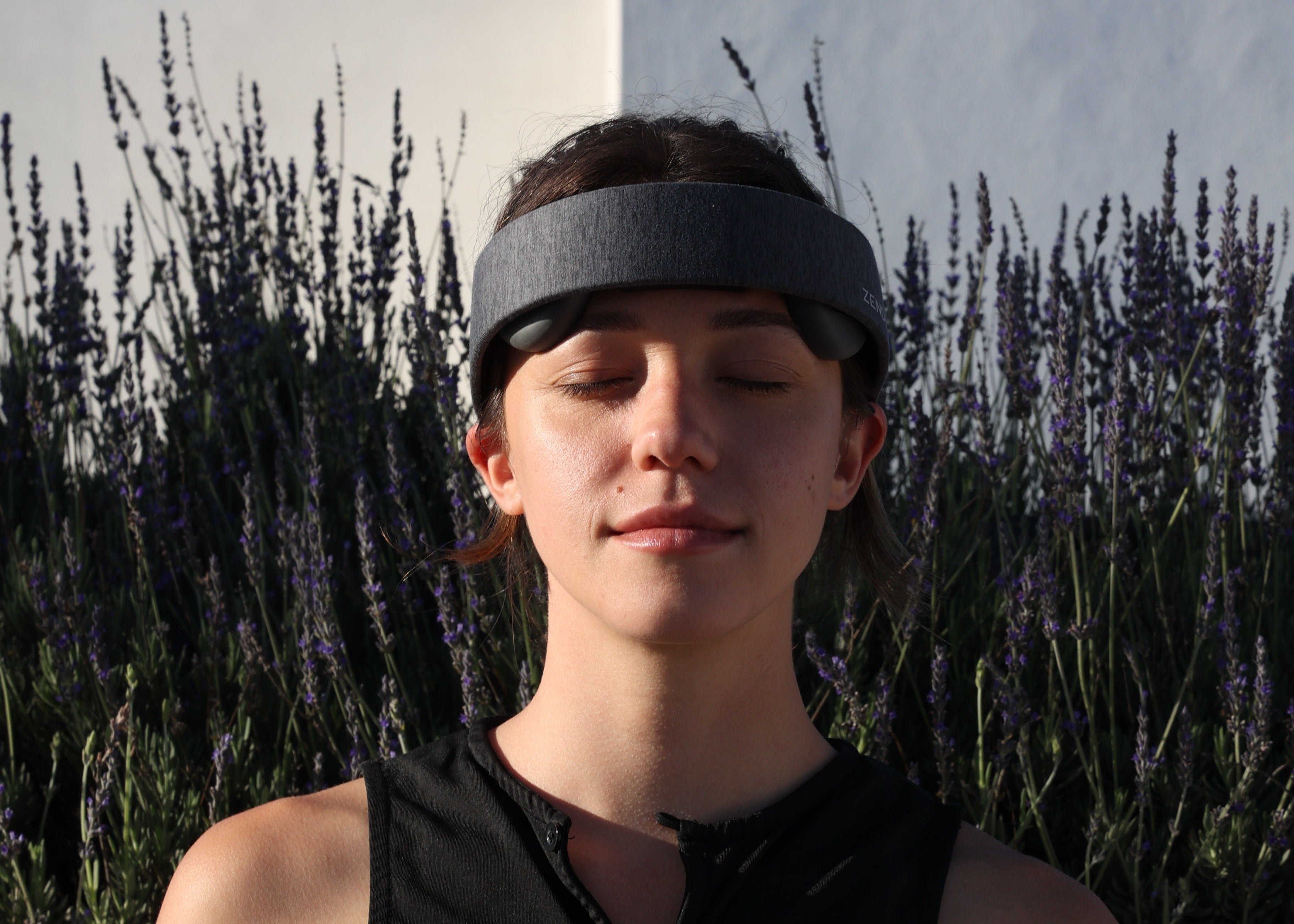
Zendo is built on tDCS
Transcranial direct current stimulation, or tDCS, passes a weak, steady current between two pads on the scalp. It does not force neurons to fire. It gently shifts how easily they fire, nudging a target region to be a little more or less active. Zendo applies this over the prefrontal cortex, the region tied to mood, attention, and calm.
- Mood. Studied as a tool for low mood and depression.
- Sleep. Examined for easier wind-down and better sleep quality.
- Focus and attention. Looked at for working memory and concentration.
- Calm and stress. Explored for relaxation and emotional regulation.
tDCS is an active area of research. The findings are promising but still developing, effects vary from person to person, and Zendo is a general wellness product, not a treatment for any medical condition.
Built on peer-reviewed brain-stimulation research.
Zendo comes out of the E-Meditation research our co-founders ran at the Medical University of South Carolina. Here is what that work actually found, stated plainly, with the limits kept in.


In a double-blind, sham-controlled MUSC study published in Brain Stimulation, active brain stimulation paired with guided meditation reduced restlessness and produced significant gains in important mindfulness measures relative to sham. The findings suggested that noninvasive neuromodulation may help accelerate entry into meditative states.
Many people struggle with racing thoughts, restlessness, and mental noise during meditation. Zendo helps quiet the mind and support a calmer, more centered experience, making it easier to stay present and engaged.
Zendo is a general wellness product for relaxation and focus. It is not a medical device and is not intended to diagnose, treat, cure, or prevent any disease.

One headband. Yours for good.
- ✓Zendo headband (reusable, rechargeable)
- ✓20 single-use saline pads to start
- ✓USB-C charging cable
- ✓14-day risk-free returns and a 6-month warranty
About the pads: Zendo uses one fresh saline pad per session, and your headband ships with 20. Refills are a 10-pack for $14.99.

Based on 40+ verified owners
"I am skeptical of anything brain related, but the first session genuinely dropped my shoulders. I use it after work now instead of doom-scrolling."
"The tingle is real and the calm is real. Twenty minutes and my head is quieter. It replaced the three meditation apps I never opened."
"Takes a few sessions to find your level. Once I did, falling asleep got noticeably easier. Reordering pads is quick."
Why Zendo?
Brain wearables split into two camps: ones that stimulate, and ones that only measure. Zendo stimulates, without the medical price tag or the homework.
| Zendo | Flow | Muse | Flowtime | Meditation app | |
|---|---|---|---|---|---|
| How it works | tDCS stimulation | tDCS stimulation | EEG biofeedback | EEG biofeedback | Audio guidance |
| Acts on your brain directly | ✓ | ✓ | Reads only | Reads only | ✗ |
| Works without an app | ✓ | ✗ | ✗ | ✗ | ✗ |
| No practice or program needed | ✓ | 12-week program | ✗ | ✗ | ✗ |
| Subscription | None | Required | Optional | Optional | Required |
| Price | $119 once | $500–800 + Rx | $295–475 | Under $200 | ~$70 / year |
| Made for | Everyday calm & focus | Depression (medical) | Meditation & sleep | Meditation tracking | Guided meditation |
Details from public sources, June 2026. Prices are approximate, vary by model and region, and may change. Flow is an FDA-cleared, prescription-only depression treatment in the US; Muse and Flowtime are EEG biofeedback devices that measure rather than stimulate.
Straight answers
Does it actually work? +
Is it safe, and who should not use it? +
What does it feel like? +
Do I have to keep buying pads? +
What is your return and warranty policy? +
Get 10% off your first order.
One email when you join, occasional notes after. No spam, unsubscribe anytime.
By subscribing you agree to receive marketing emails from Zendo.